Fabric Deep Dive
2026年3月17日
Viscose vs Rayon: What’s the Difference? A Complete Guide for Textile Sourcing
If you’re in textile sourcing, manufacturing, or fashion design, you’ve likely encountered two terms used interchangeably—but often confusingly: viscose and rayon . Are they the same fiber? Do regi
If you’re in textile sourcing, manufacturing, or fashion design, you’ve likely encountered two terms used interchangeably—but often confusingly: viscose and rayon. Are they the same fiber? Do regional markets have different requirements for labeling? And why does this mix-up matter for your supply chain?This guide breaks down the key differences, regional nuances, and practical implications of viscose vs rayon—so you can avoid labeling mistakes, communicate clearly with suppliers, and make informed sourcing decisions.
First: The Core Truth About Viscose and Rayon
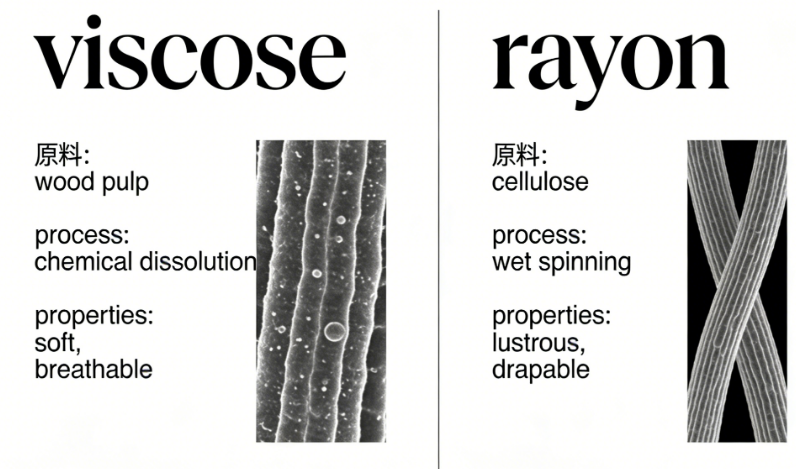
Let’s start with the basics: Rayon is a broad category, while viscose is a specific type of rayon. Both are regenerated cellulose fibers (made from plant-based materials like wood pulp), but their names are governed by regional standards and industry conventions—not a strict technical difference.In short: All viscose is rayon, but not all rayon is viscose. Viscose is the most common, widely used type of rayon, accounting for over 80% of rayon production worldwide.
Regional Labeling Differences: What You Need to Know
The biggest source of confusion comes from regional naming conventions. Different markets have specific preferences (and sometimes regulations) for how these fibers are labeled—critical for compliance, customer trust, and avoiding shipping delays.
1. European Union (EU)
In the EU, the term “viscose” is preferred and widely accepted for labeling. While “rayon” is not prohibited, it’s less common—EU consumers and buyers are more familiar with “viscose” as the standard name for this fiber. For compliance with EU textile labeling regulations (e.g., REACH), using “viscose” ensures clarity and avoids confusion.
2. United States (US)
In the US, the Federal Trade Commission (FTC) classifies “rayon” as the official term for regenerated cellulose fibers. Here, “viscose” is often used interchangeably with rayon, but “rayon” is the more traditional, widely recognized name in the US market. Many US brands and retailers prefer “rayon” on labels to align with consumer familiarity.
3. Global Sourcing Implications
When working with suppliers or clients across regions, this naming difference matters. For example: A European buyer may request “viscose fabric,” while a US client may ask for “rayon fabric”—but they’re likely referring to the same material. Clarifying this upfront prevents miscommunication, wrong orders, and costly rework.
Myth Busting: Is Rayon for Staple Fiber and Viscose for Filament?
Another common misconception in the industry: That “rayon” refers to staple fiber (short fibers) and “viscose” refers to filament (long, continuous fibers). This is not true.Both viscose and rayon are available in both staple and filament forms. The terms “staple” and “filament” describe the fiber length, not the type of rayon. For example: Viscose staple fiber is used in knitwear, while viscose filament is used in silk-like woven fabrics—just like rayon can be either staple or filament.
Why This Matters for Your Textile Sourcing
Clear understanding of viscose vs rayon helps you:
- Avoid labeling errors that could lead to compliance issues or customer complaints.
- Communicate effectively with suppliers and clients across global markets.
- Make informed decisions about fiber selection for your products (e.g., viscose/rayon is ideal for lightweight, breathable fabrics like dresses, blouses, and linens).
Final Takeaway
Viscose and rayon are often two names for the same core fiber—with regional preferences driving which term is used. The key is to align your labeling and communication with the market you’re targeting (EU: viscose; US: rayon) and clarify with your supply chain partners to avoid confusion.At Alibric Sourcing Solutions, we help brands and buyers navigate these textile nuances, ensuring smooth sourcing and compliance across global markets. Whether you’re looking for viscose/rayon fabrics or need guidance on fiber selection, we’re here to help.